

Welcome
The Center for Socinian, Philosophical, and Religious Studies conducts research and outreach on behalf of the largely unrecognized Socinian movement, its forefather Michael Servetus, and their profound influence on the Enlightenment and beyond, including the foundation of American government. Over time, the Center has grown to encompass more than the Socinian movement to address relevant subjects in the fields of philosophy, humanism, and religion. The Center has produced dozens of publications and serves as an authoritative resource in these areas. More...
History
The Socinians were members of the specific radical Reformation international religious group that was formed originally in Poland and in Transylvania in the 16th century and went beyond the limited scope of the reform initiated by Luther or Calvin. Their religious doctrines were based on Antitrinitarianism, which was developed by Michael Servetus and incorporated by Italian Humanists, Anabaptists, and the Moravian Brethren.
Antitrinitarian sects emerged in mid-16th century, calling themselves Polish Brethren. They were also known abroad as Socinians, after Italian theologian Faustus Socinus (mausoleum pictured left), who systematized the doctrines of the Polish Brethren. Although religious liberty was part of the Socinian doctrine, the persecution and coercion they encountered due to the Counter Reformation led them to formulate the most advanced ideas in the realm of human freedom and church-state relations.
The Socinians' influence spread across Europe and guided future philosophical trends, precipitating the Enlightenment. The Polish Brethren's views on religious freedom were later expanded and popularized by philosophers such as John Locke, Pierre Bayle, and Baruch Spinoza. Many of Locke's Socinian-shaped ideas were borrowed by American founding fathers James Madison and Thomas Jefferson and integrated into the U.S. Constitution. More...
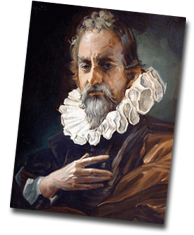
Michael Servetus was a 16th century Spanish theologian, physician, cartographer, and Renaissance humanist. He was a polymath versed in many sciences: mathematics, astronomy and meteorology, geography, human anatomy, medicine and pharmacology, as well as jurisprudence, translation, poetry and the scholarly study of the Bible in its original languages. The writings of Servetus laid the foundations for the Socinian movement. More...
FEATURED PUBLICATION
Authored by Center founder Marian Hillar, Ph.D., From Logos to Trinity: The Evolution of Religious Beliefs from Pythagoras to Tertullian presents a critical evaluation of the doctrine of the Trinity, tracing its development and investigating the intellectual, philosophical, and theological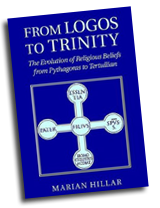 background that shaped this influential doctrine of Christianity. It identifies important non-Christian sources of Trinitarian thought in addition to considering Hebrew messianic concepts and Greek philosophic ideas that contributed to a religious tenet that came to be distinctively Christian.
Buy
| Synopsis | Excerpt | Tertullian
Lecture (Polish) | Interview (Polish)